
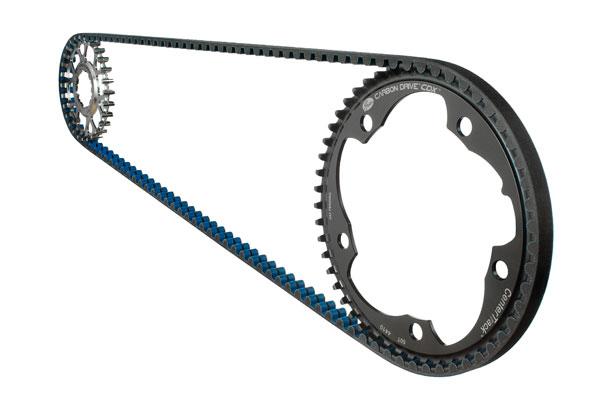
Converting a bicycle from chain to Gates Carbon Drive belt
How much work is involved in converting a bicycle from a chain to a Gates Carbon Drive belt, and what makes the result reliable? HILITE has built more than one hundred belt-drive bicycles across aluminium and titanium platforms, with Pinion gearboxes and compatible hub gears.
What does a chain-to-belt conversion require?
A belt drive needs a suitable frame, compatible front and rear sprockets, the correct belt length and a way to set belt tension. A conventional endless belt also needs an opening in the rear triangle so that it can be installed. The frame must be designed and approved for this purpose; an ordinary chain-drive frame is not automatically suitable.
On our titanium builds, the frame opening is usually integrated into the right seatstay. The joint is designed to be discreet while allowing the belt to be installed and removed. Frame stiffness, drivetrain compatibility and clearances must be checked as part of the complete system.
Why choose a Gates belt drive?
Once correctly specified and installed, a belt offers a clean, quiet drivetrain without chain lubrication. The CenterTrack design helps guide the belt on the sprockets. Service life depends on use, contamination, alignment, tension and component condition, so maintenance checks still matter.
Our belt-drive experience includes compatible Shimano Alfine 8- and 11-speed hubs, Rohloff Speedhub and Pinion gearboxes. The exact sprockets, belt line and any required belt-retention device depend on the selected system and its manufacturer requirements.
Tools and the main workshop checks
A conversion may require hex keys, a chain tool, the correct sprocket-removal tools, a torque wrench, a caliper or belt-line measuring tool, and a suitable belt-tension measuring tool. Use the instructions and torque settings for the actual frame, gearbox or hub, sprockets and belt system.
- Confirm that the frame and drivetrain are suitable for the planned belt system before buying parts.
- Remove the chain and existing drivetrain parts as required, then fit the compatible front and rear sprockets.
- Open the designed frame joint, install the belt and close the joint according to the frame instructions.
- Check that the front and rear sprockets are aligned on the specified belt line.
- Set and check belt tension at several crank positions, then verify wheel alignment, clearances and all fasteners.
Belt line and tension are essential
The front and rear sprockets must run in the correct plane so the belt is not forced sideways or twisted. Poor alignment can cause noise, uneven wear or unreliable engagement. The adjustment method depends on the crank, bottom bracket, hub and sprocket arrangement; spacers must only be used where the component manufacturer allows them.
Measure tension with a suitable tool or the method specified by Gates for the system. Compare readings at several crank positions rather than relying on a single measurement. Follow the current handling instructions when installing, storing or servicing the belt.
Gates belt-drive information, owner manuals and installation resources
Planning a belt-drive HILITE
Compare Pinion bikes, Rohloff bikes and our Pinion, Rohloff and Gates guide. For an existing bicycle, contact HILITE in Basel to discuss whether a conversion is suitable for your frame and intended use.
